March 2016
Mapplethorpe was a New Yorker, by birth and by temperament, but in 2011 his archives landed on the other side of the country, when LACMA joined forces with the Getty to acquire from Mapplethorpe’s estate a cache of prints, letters, ephemera, and no fewer than 120,000 negatives. They have teamed up, too, for this comprehensive two-part exhibition, which stretches beyond the greatest hits to include lesser-known Polaroids, color photography, hand-painted collages, and juvenilia. (In September the two shows fuse and travel to Montreal, then Sydney.) LACMA’s show promises a more chaotic, experimental Mapplethorpe, with a focus on his sources. It’s the Getty that will show, alongside his stately compositions of orchids and calla lilies, the “X Portfolio” of leather-clad gents, one of whom has a bullwhip inserted in a certain part of his anatomy: self-portrait four.
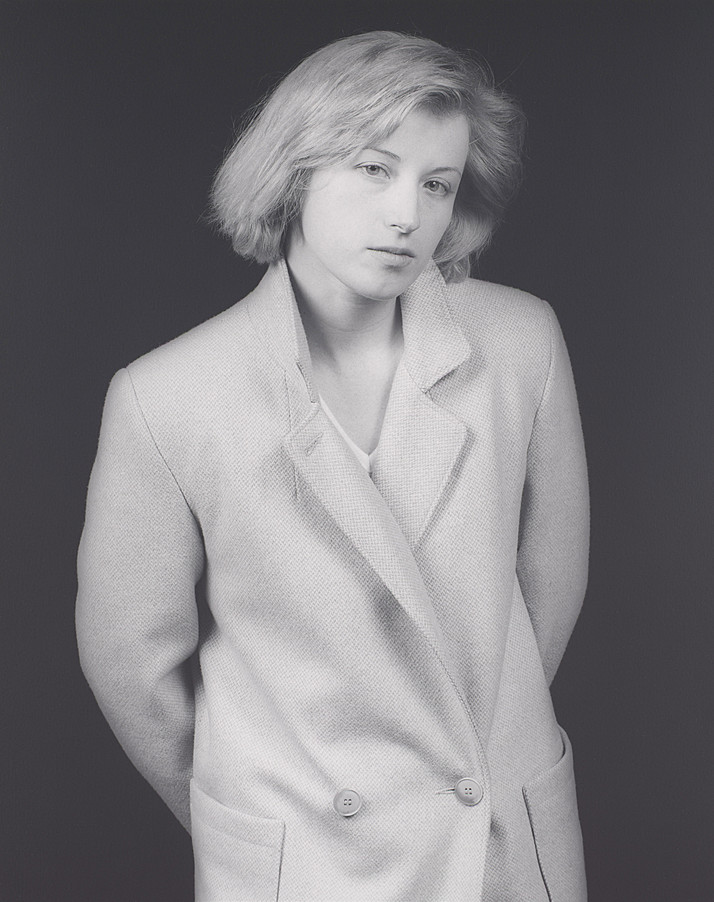
Robert Mapplethorpe. Cindy Sherman. 1983. © The Estate of Robert Mapplethorpe.
Robert Mapplethorpe: The Perfect Medium
J. Paul Getty Museum, Los Angeles
Opens March 15
Los Angeles County Museum of Art
Opens March 20
Self-portrait one, from 1975: young, nude, blithe, nearly androgynous, he smiles from the edge of the composition as he extends his wiry arm across a sea of white. Self-portrait two, from 1980: a little older now, sterner, much more masculine, he wears a leather jacket and lets a cigarette dangle from his lips. Self-portrait three, from 1988, the year before his death: he has aged rapidly, he stares forward, and in his right hand he holds a cane topped with a skull finial, like some governor of Hades. Robert Mapplethorpe liked to insist — and, amid cries of obscenity, his legal defenders had to insist — that his photographs were exercises in form, and that his often shocking subject matter was of no great importance. But look at the protean, astonishing self-portraits, burning with sex, freighted with death: there, you can see what Mapplethorpe really believed in.
Mapplethorpe was a New Yorker, by birth and by temperament, but in 2011 his archives landed on the other side of the country, when LACMA joined forces with the Getty to acquire from Mapplethorpe’s estate a cache of prints, letters, ephemera, and no fewer than 120,000 negatives. They have teamed up, too, for this comprehensive two-part exhibition, which stretches beyond the greatest hits to include lesser-known Polaroids, color photography, hand-painted collages, and juvenilia. (In September the two shows fuse and travel to Montreal, then Sydney.) LACMA’s show promises a more chaotic, experimental Mapplethorpe, with a focus on his sources. It’s the Getty that will show, alongside his stately compositions of orchids and calla lilies, the “X Portfolio” of leather-clad gents, one of whom has a bullwhip inserted in a certain part of his anatomy: self-portrait four.
Photography, said Mapplethorpe, “was the perfect medium, or so it seemed, for the 70s and 80s, when everything was fast.” But the title of this extravaganza also pays direct homage to “The Perfect Moment,” his posthumous 1989–90 retrospective — which Washington’s now defunct Corcoran Gallery of Art canceled, and which got the director of Cincinnati’s Contemporary Art Center arrested on charges of obscenity. (He was acquitted.) It’s salutary that the Getty and LACMA are including archival material from that awful brouhaha, and placing his explicit photographs in the context they came from rather than insisting on some antiseptic view of pure form. For there is something unforgivably facile about the recourse to classicism to discount the enduring surprise and even discomfort of Mapplethorpe’s photographs. The classical age, if you’ve forgotten, was pretty into sex and death too.
The Promise of Total Automation
Kunsthalle Wien, Vienna
Opens March 11
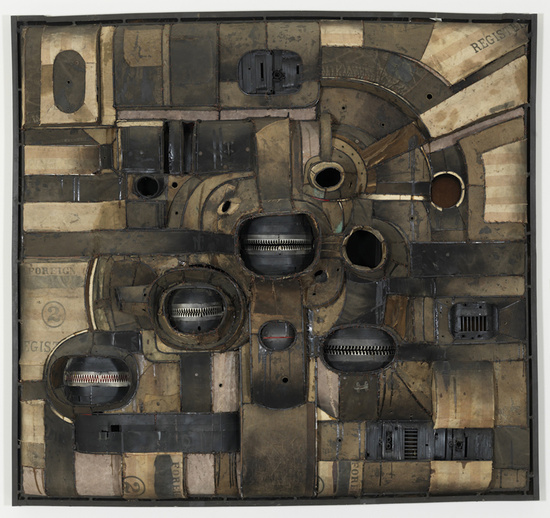
A century ago Keynes predicted that technology would free us from the tyranny of work; instead we hustle harder than ever, even though productivity has plateaued. The economic promises and disappointments of machines are the concern of two dozen artists here, including the intriguing Tyler Coburn, who recently staged a performance with the actor who gave her voice to Siri.
John Divola
Maccarone, New York
Opens March 12
After his sprawling 2013 retrospective at three Los Angeles museums, Divola returns with a new series of photographs charting the deterioration of a housing project in Moreno Valley, California. But he is not exactly, or not only, a documentarist; he also engages with the decaying architecture, painting and leaving marks on empty rooms and surfaces. Divola also makes use of different cameras and devices; some photographs are shot with a regular 8x10, while others, exceptionally clear, make use of the same scanning technology as NASA’s Mars Rover.
Revolution in the Making: Abstract Sculpture by Women, 1947–2016
Hauser Wirth & Schimmel, Los Angeles
Opens March 13
At 100,000 square feet, and saddled with a name whose three trochees makes it sound more like an entertainment law firm, the Swiss gallery's new Californian home is certainly weighty. Its inaugural exhibition, organized by the former MOCA curator Paul Schimmel and the art historian Jenni Sorkin, gathers 100 works by more than three dozen female artists — among them Ursula von Rydingsvard, who's interviewed at length in Even no. 3.
Ed Atkins
Statens Museum for Kunst, Copenhagen
Opens March 17
The young British artist, fresh off blockbusters at the Serpentine and Kunsthalle Zürich, takes his ornery hi-def video animations to SMK’s experimental space. We’re looking forward to more of his vice-ridden, highly chiseled avatars delivering uncanny soliloquies that prod at the real and the performed.
20th Biennale of Sydney
Art Gallery of New South Wales, Museum of Contemporary Art, and elsewhere, Sydney
Opens March 18
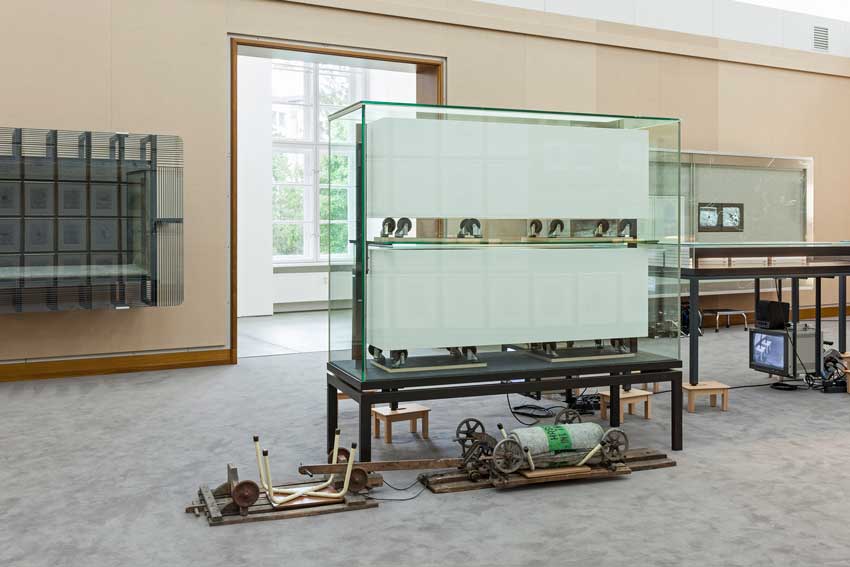
The last edition of this biennial — the longest-running in the world after Venice and São Paulo — was dogged by a massive controversy: artists accused its lead sponsor of complicity in human rights abuses, and the chairman of the board ended up resigning. This year is looking quieter, and we aren’t much excited by curator Stephanie Rosenthal’s promise to divide the show into a sequence of “embassies.” Better is the promised emphasis on dance, and the inclusion of such choreographers as Boris Charmatz and William Forsythe.
Nasreen Mohamedi
Met Breuer, New York
Opens March 18
On the advisability of The Met Breuer, the Metropolitan Museum of Art's eight-year occupation of the Whitney’s former home, we are holding our fire until opening day. But at least one of the inaugural exhibitions has promise: this retrospective of the late Indian artist, widely read and well-traveled, whose delicate line drawings have earned their place in a better, more global history of modernism.
Reinhard Mucha
Kunstmuseum Basel
Opens March 19
After leaving the Kunstakademie Düsseldorf in 1981, this German artist began to make enigmatic sculptures that repurpose old furniture and hardware. Mucha had a career-making exhibition at Kunsthalle Basel in 1987, and this return to the city focuses on his massive Frankfurter Block, a funhouse of history and commerce begun three decades ago and only recently completed.
Seydou Keïta
Grand Palais, Paris
Opens March 31
Fifteen years after his death, the self-taught master of the camera receives a major retrospective of his stately, Vogue-worthy black-and-white portraits of 20th-century Malian society. In Keïta's warm and incisive portraiture, usually featuring seductive cloth backdrops, west African youth engage in a thousand little acts of self-fashioning.